Give each story a purpose
Ask what the author wants a reader to notice, imagine, or understand. A small idea can be a meaningful place to begin.
 Young AuthorsUNIVERSITYLiteracy. Creativity. Publishing.
A new chapter starts in your classroom.
Get my free teacher kit →YOUR CLASSROOM TOOLBOX
Practical ways to help students create a clear, thoughtful book while preserving their own voices.
Free PDF downloads · $0 email checkout
Ask what the author wants a reader to notice, imagine, or understand. A small idea can be a meaningful place to begin.
Plan the beginning, middle, and ending before polishing every sentence. Use pictures or supported communication to hold the idea.
One useful detail can help a reader picture a place, a feeling, or a character’s choice. More words are not always better.
Ask questions and offer options. Help students clarify their meaning without replacing their language or choices.
Check readability, illustration clarity, author credit, and the order of contributions. Confirm final file specifications with YAU.
Invite students to identify something they tried, changed, or enjoyed. A book is a creative journey, not a contest for perfect writing.
READY FOR YOUR CLASSROOM
 FREE PDF
Writing · 2 pages
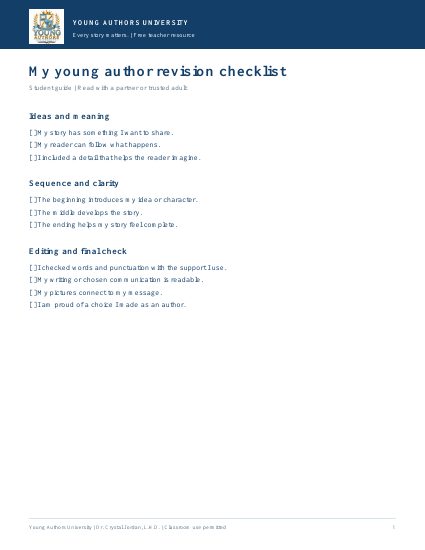
A clear student-friendly pass through ideas, sequence, details, and editing.
 FREE PDF
Planning · 2 pages
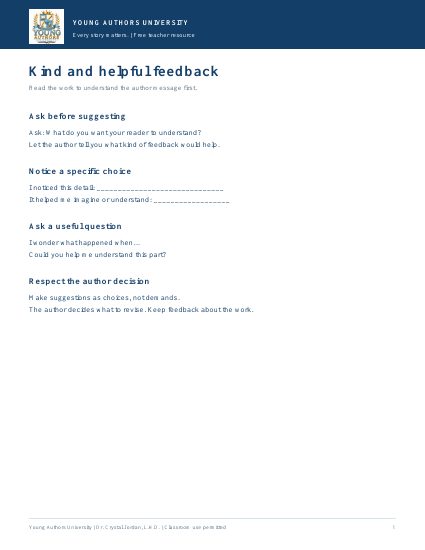
A feedback guide and response page that preserve each student’s original voice.
 FREE PDF
Writing · 2 pages
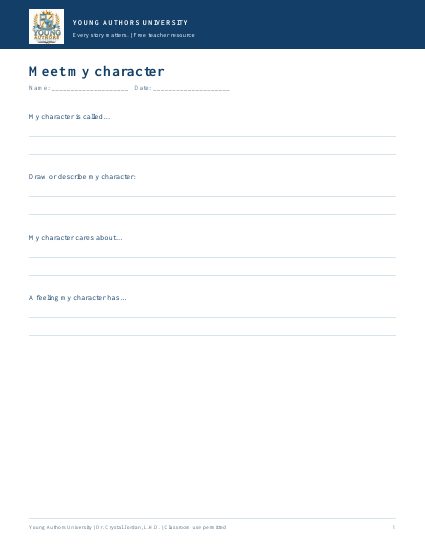
Build a character with feelings, a goal, a challenge, and a place in the story.
 FREE PDF
Publishing · 2 pages
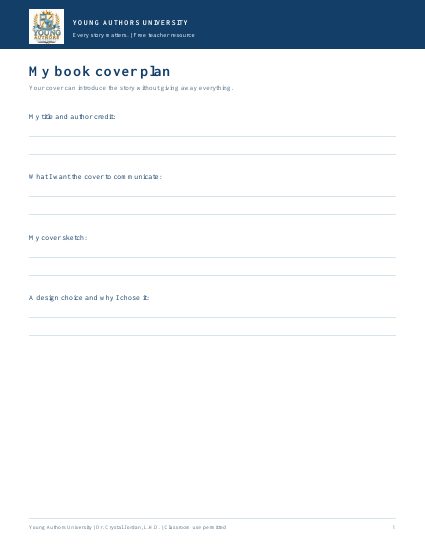
Plan a title, cover image, author credit, and back-cover description.